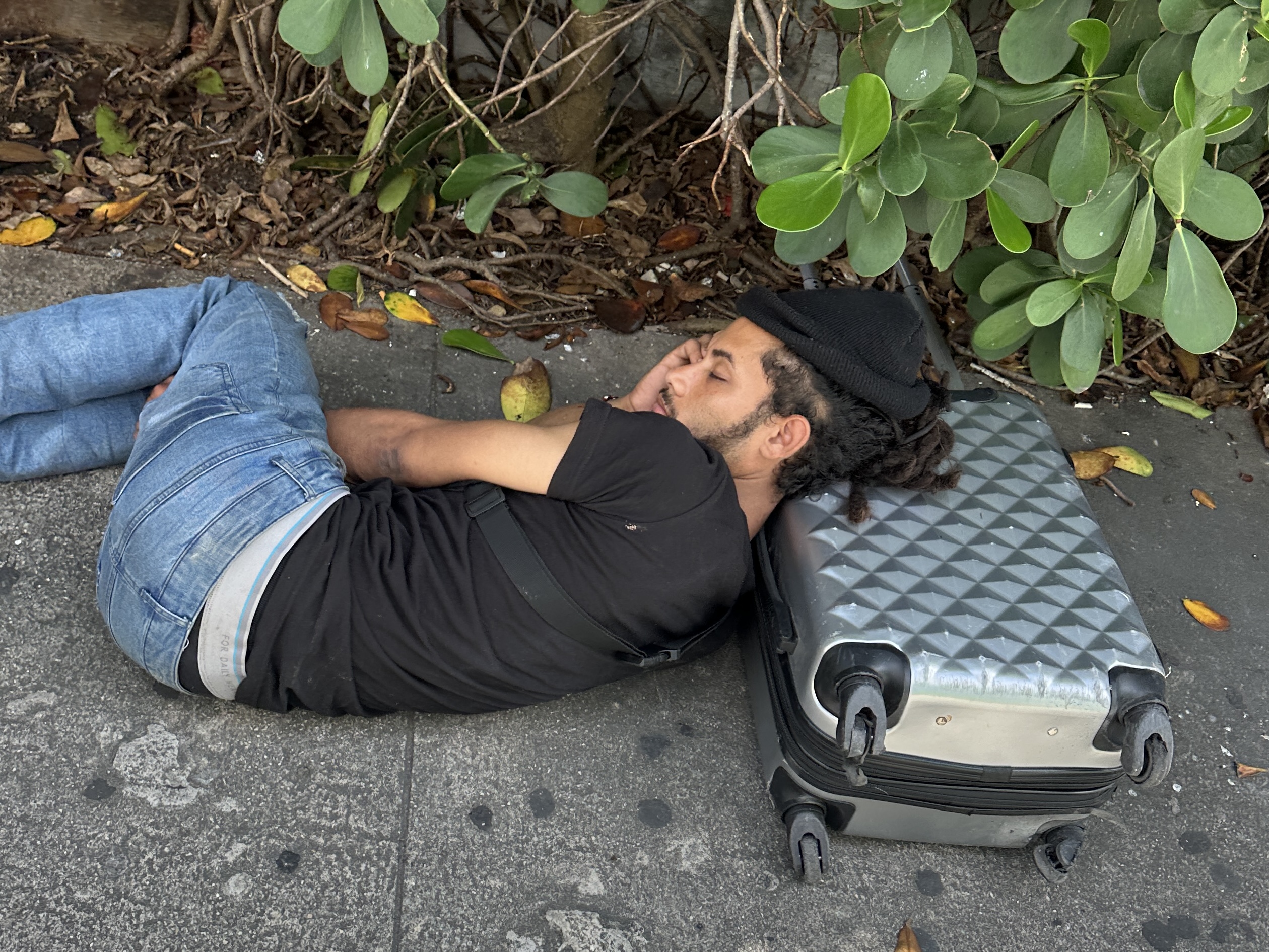
Miami moves to expand police authority under camping ban
Miami police could soon arrest people sleeping on city streets without first issuing a written warning after commissioners voted 4-1 on Thursday, July 9, to advance an ordinance that would loosen enforcement procedures under Florida's statewide public camping ban.
The same state law, HB 1365, applies in Coral Gables, South Miami and Pinecrest, though none of those municipalities has announced similar changes.
District 3 Commissioner Rolando Escalona proposed the measure, which now heads to a second and final reading. A date for that vote has not been announced. District 5 Commissioner Christine King cast the lone dissenting vote.
Under the current Miami ordinance, officers must provide a written warning and allow people time to gather their belongings before making an arrest. Escalona's proposal would eliminate both requirements. It does retain one safeguard: Police could not make an arrest if no shelter beds are available.
Police chief says arrests remain uncommon
Miami Police Chief Edwin Lopez told commissioners the department has made only two camping-ban arrests in 2026.
"Arrests are not used often," Lopez said, adding that the proposal "gives us an opportunity for those cases that are very rare to seek other, alternative actions."
Lopez did not elaborate on what those alternative actions would be.
Public speakers raise concerns about ordinance
No residents spoke in favor of the proposal during the July 9 meeting. Several urged commissioners to reject it.
Matthew Pastewski, a fourth-year University of Miami medical student who treats unsheltered people with the Miami Street Medicine team, said jailing people without housing alternatives often leaves them worse off.
Detainees frequently lose medications, identification documents and cell phones, he told commissioners, and leave jail "sicker, more disconnected."
Ron Book, chairman of the Miami-Dade Homeless Trust, has also questioned the proposal. He told the Miami Herald that existing ordinances already allow arrests and that "simply arresting people for the sake of them being homeless is probably an unproductive way to manage and deal with the problem."
Miami has county's largest unsheltered population
As of January 2026, 605 people were sleeping on Miami's streets, accounting for more than half of Miami-Dade County's unsheltered population, according to the Homeless Trust's most recent count.
The county has announced plans to add about 80 emergency shelter beds, but Book has described shelter capacity as "tight," and no timeline has been announced for the new beds to open.
Neighboring municipalities have taken different approaches
South Miami has taken a different approach. The city declared "Functional Zero" for chronic homelessness in September 2025 after a Homeless Trust census counted just three unsheltered people within city limits. The city's strategy relies on a Housing First model, a dedicated community policing officer and a contracted outreach provider.
Coral Gables Police, South Miami Police and the Miami-Dade Police Department, which provides law enforcement services in Pinecrest, have not commented on how they enforce HB 1365 locally.
State law sets baseline while local enforcement varies
Florida's public camping ban, signed into law in 2024, allows residents to sue local governments that fail to enforce the law but does not prescribe how enforcement must be carried out. That leaves individual municipalities to establish their own enforcement procedures.





.jpg)