Twenty-three films from the United States, Canada, Australia and beyond will screen at the University of Miami's Bill Cosford Cinema when the inaugural Miccosukee Indigenous Film Festival opens Friday, Oct. 9.
The four-day festival runs through Monday, Oct. 12, at the cinema inside UM's Memorial Building at 5030 Brunson Drive. The program includes 22 competition films plus a special closing-night screening, with documentaries, narrative films, shorts and features. Q&A sessions with visiting filmmakers are planned after screening blocks.
Festival director Juan Lama, who also serves on the Iron Arrow Honor Society's Council of Elders, organized the event through a separate nonprofit. Lama said he hopes the festival creates space for dialogue between Indigenous and non-Indigenous communities. The festival arrives as UM marks its centennial and Iron Arrow approaches 100 years on campus.
Iron Arrow, founded in 1926 by UM's first president, Bowman Foster Ashe, is regarded by the university as its highest honor. The society has long incorporated Miccosukee clothing and traditions into its ceremonies. Some Indigenous students and alumni have criticized those practices as cultural appropriation. In 2022, the UM Student Senate voted 28-5, with seven abstentions, for a resolution calling on the university to disaffiliate from the society, according to The Miami Hurricane.
Miccosukee tribal leaders have taken a different position. A 2018 memorandum among the tribe, Iron Arrow and the university reaffirmed their relationship.
Miccosukee Chairman Talbert Cypress framed the festival around the tribe's enduring presence in South Florida.
"We have been here and we always will be here," Cypress said.
Organizers required an Indigenous connection for every entry. Films must be written, directed or produced by members of Indigenous communities, feature Indigenous lead actors, or focus on or represent Indigenous cultures.
Festival opens with Amazon coming-of-age story
Opening night begins at 6 p.m. Friday with "Nunkui," directed by Verenice Benítez. The Ecuador-Chile-Germany coproduction follows a 13-year-old Shuar girl in the Ecuadorian Amazon as mining companies move into the region and her community faces eviction.
Benítez co-founded Cámara Shuar, a community film laboratory, with Shuar leader Domingo Ankuash, who plays the girl's grandfather in the film.
Saturday, Oct. 10, starts away from the theater. Festivalgoers can join a morning visit to the Miccosukee Indian Village on the Tamiami Trail, departing the cinema parking lot at 8 a.m. Tours, demonstrations and an alligator show run from 9 a.m. to noon, with optional airboat rides available at additional cost. The group is scheduled to return to campus by 1 p.m.
Screenings follow Saturday at 3, 5:30 and 8 p.m. The festival continues Sunday with additional screening blocks at the same times.
Closing film tells Buffalo Tiger's story
The closing-night film arrives Monday, Oct. 12, which Miami-Dade County recognizes as Indigenous Peoples' Day.
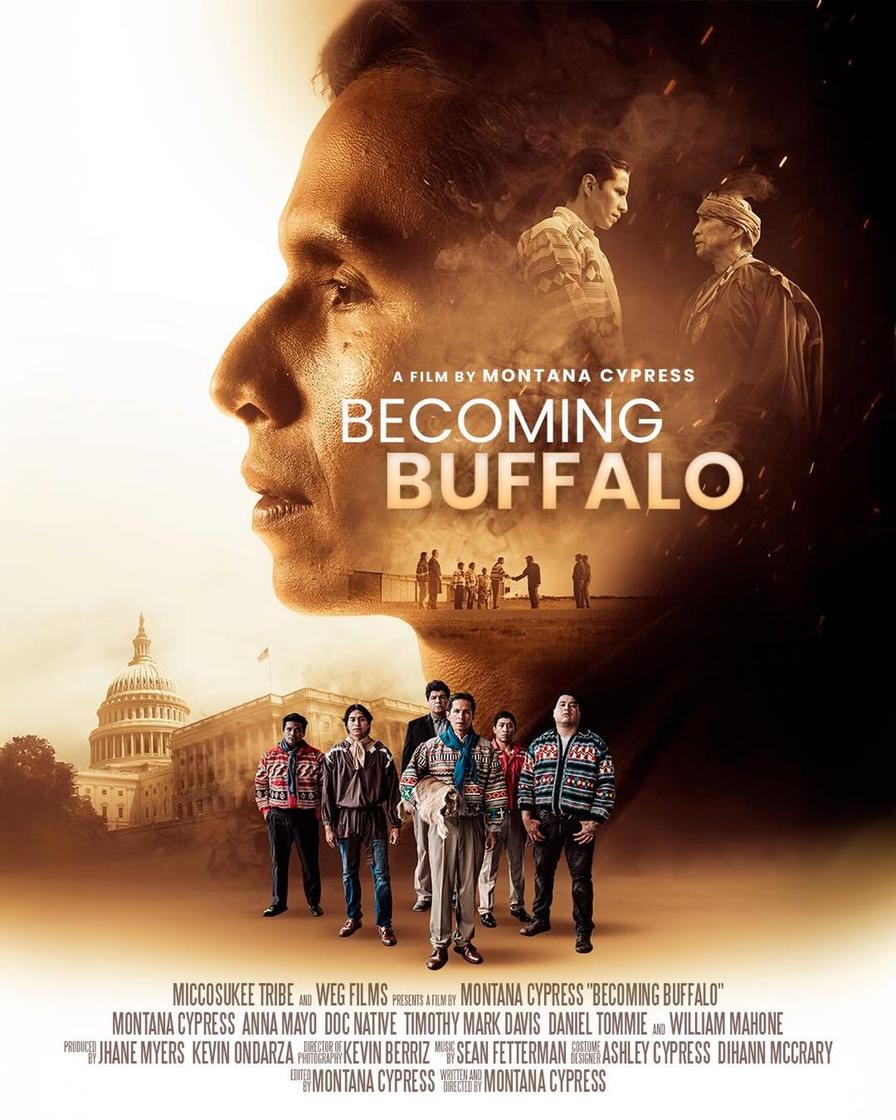
"Becoming Buffalo," written and directed by Montana Cypress, screens at 7 p.m. The film traces the Miccosukee Tribe's pursuit of sovereignty through the life of Buffalo Tiger, who led a tribal delegation to Cuba in 1959. The Cuban government recognized the Miccosukee as a sovereign nation during the visit, and the United States granted federal recognition to the Miccosukee Tribe of Indians of Florida in 1962.
Cypress grew up hearing elders tell stories about Tiger and plays him in the film. An awards ceremony follows the screening.
Tickets are available for individual screening blocks, as well as day and full-festival passes.
Festival at a glance
- Friday, Oct. 9, 6 p.m. — Opening night: "Nunkui," Bill Cosford Cinema
- Saturday, Oct. 10, 8 a.m. — Miccosukee Indian Village visit; screenings at 3, 5:30 and 8 p.m.
- Sunday, Oct. 11, 3 p.m. — Screenings at 3, 5:30 and 8 p.m.
- Monday, Oct. 12, 7 p.m. — Closing night: "Becoming Buffalo," followed by awards ceremony


.jpg)