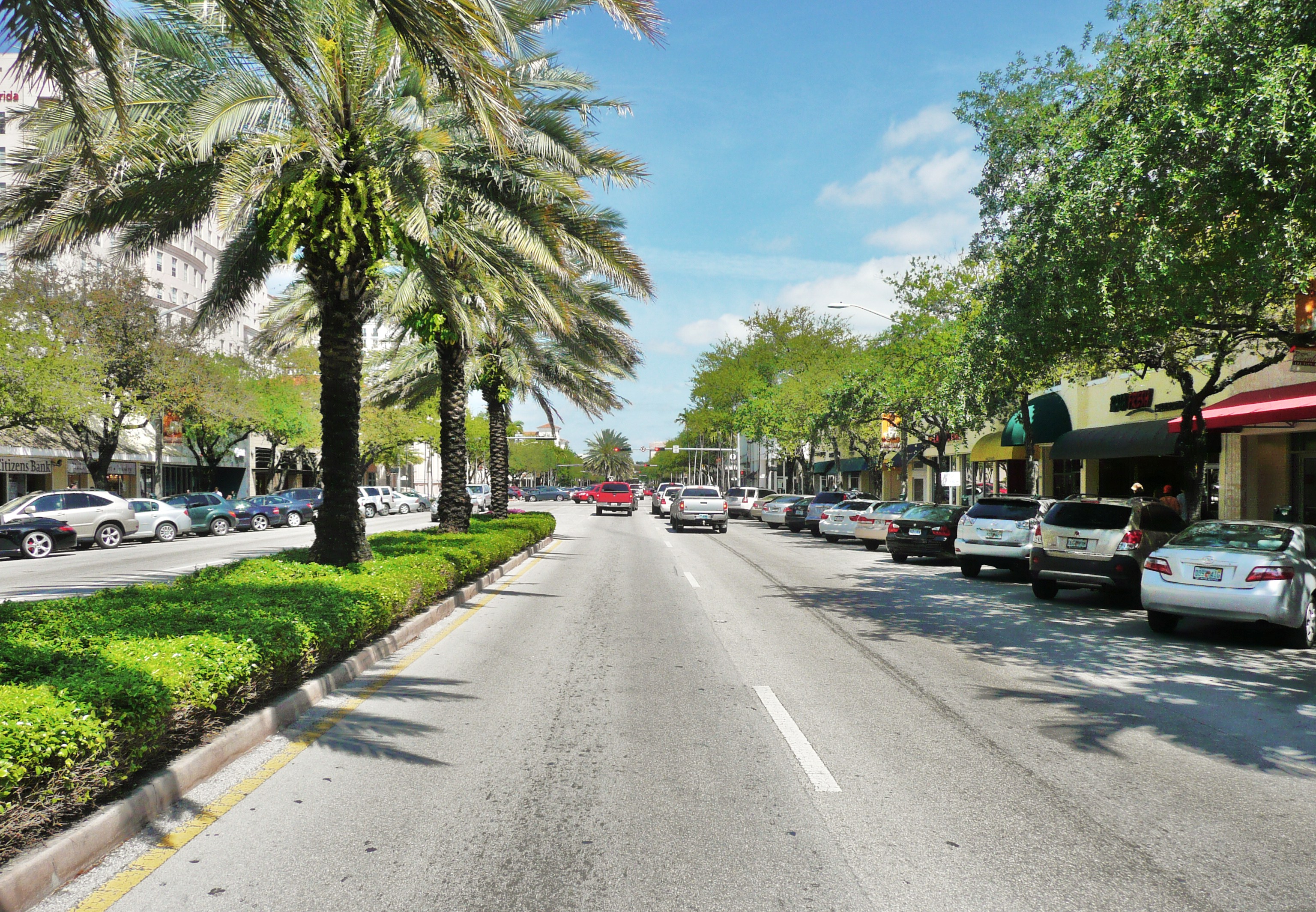
A proposed $50,000-$75,000 pedestrian safety study at Ponce de León Boulevard and Miracle Mile is expected to return to the Coral Gables City Commission this month in expanded form, after commissioners deferred the item on Tuesday, June 2, and ordered a broader infrastructure review of the corridor.
Commissioner Melissa Castro withdrew her motion to approve the study. Commissioner Richard Lara withdrew his second. The deferral came by consensus after Mayor Vince Lago asked Transportation Advisory Board Chair Roland Rodriguez to meet with City Manager Peter Iglesias, Public Works Director Hermes Diaz and Assistant Transportation Director Melissa De Zayas to develop wider-ranging recommendations before any vote.
The original proposal was narrow: a feasibility study for a scramble crosswalk at Ponce and Miracle Mile, a design that halts all vehicle traffic simultaneously and lets pedestrians cross in any direction, including diagonally. Rodriguez, a civil engineer, told commissioners that most of the infrastructure is already in place and that implementation would require restriping, signage and signal retiming rather than major construction. He cited a comparable installation at SW 8th Street and Brickell Avenue that cost roughly $120,000.
But the discussion ballooned. Commissioners raised failing Brazilian stone pavers, ADA-compliant audible pedestrian signals, lit no-right-turn signs and the possibility of extending the scramble concept to all three signalized intersections along Miracle Mile.
Lago called a stretch of sidewalk in front of Regions Bank on Miracle Mile, where three different paving treatments meet and tile is lifting, an "absolute disaster." He said the city budgets $200,000 annually for paver maintenance and favored exploring stamped asphalt or stamped concrete alternatives, noting the cost is harder to justify given anticipated Tallahassee property tax changes.
Lara said expanding scramble crosswalks along the full corridor could draw pedestrian traffic to Miracle Mile's underperforming western block, where businesses have struggled to sustain foot traffic.
Lawsuit backdrop
The discussion unfolded less than a month after Gables Gazette reporting identified 11 active lawsuits alleging dangerous conditions on city-maintained sidewalks, crosswalks and pedestrian infrastructure.
Among them: Zubillaga v. City of Coral Gables. Marisol Linares Zubillaga, 74, alleges she fell on broken and uneven brick pavers at a mid-block crosswalk in the 200 block of Miracle Mile on Nov. 23, 2024, sustaining bilateral rotator cuff tears that required right shoulder replacement surgery. A left shoulder replacement may still be needed.
Court filings reviewed by the Gazette cite city records showing a licensed contractor flagged that crosswalk for repair in July 2020. A city internal survey documented the same location as needing repair in October 2021. The city did not issue a purchase order for Miracle Mile paver restoration until April 2025, five months after Zubillaga's fall.
The city has not explained the delay.
City Attorney Cristina Suárez's office declined to address the infrastructure maintenance questions, stating it would not comment on litigation strategy. Those questions were among 36 submitted by the Gazette in April.
Budget pressure
The timing adds another layer: the city's sidewalk repair and replacement budget is set to drop from $2 million in the current fiscal year to $1 million in FY 2026-27, according to the Wednesday, June 3, Capital Improvements Plan workshop. Meanwhile, the city received $60,000 toward a citywide Pedestrian Master Plan, though staff confirmed at the Transportation Advisory Board's Tuesday, July 21, meeting that the agreement to receive the funding is still being executed.
What's next
Rodriguez will meet with Iglesias, Diaz, De Zayas and city staff before the item returns to the commission. The scope will cover signal technology, ADA infrastructure, paver alternatives, signage and potentially all three Miracle Mile intersections. No specific August meeting date has been posted to the city's Legistar calendar. Residents can monitor that calendar for agenda updates.



.jpg)